Dear Fellow Gardener,

We would like to thank you for placing this order with us, and hope that you fully enjoy your gardening experience. We are aware that you have many gardening choices today and are pleased you are putting your trust and confidence in our company. We strive to offer the very best the fields have to offer each and every year! Please take a few moments to read over the important information we have included. These pages are a valuable resource in helping to start your plants in the right direction. The information within this planting guide should answer most, if not all, questions you may have about your order and how to care for your plants.

Pay particular attention to the first section, "When Your Order Arrives" on page 2 and our guarantee listed below. These are your important first steps in achieving success.

We wish you many fun-filled hours spent enjoying your gardens and thank you again for allowing us the opportunity to share this experience with you.

Happy and Successful Gardening!!

PLEASE READ **IMPORTANT** PLEASE READ

Our One Year Guarantee

If any item you purchased from us does not live, for a FREE REPLACEMENT just RETURN THE ORIGINAL SHIPPING LABEL along with your written request within 1 year of receipt. If you are dissatisfied with any merchandise, return it together with the ORIGINAL SHIPPING LABEL within 1 year of receipt for a FREE REPLACEMENT . Replacement guarantee is VOID unless the ORIGINAL SHIPPING LABEL is returned. For a REFUND of the purchase price, RETURN THE ITEM AND THE ORIGINAL SHIPPING LABEL, with the correct postage affixed, within 14 days of receipt.

SUBSTITUTION POLICY

Orders are filled by item number exactly as received. If a variety is sold out, we reserve the right to substitute one of equal or greater value.


Table of Contents
When Your Order Arrives Small Fruits, Berries and Kiwi
Preparing the Ground for Planting House and Container Plants
Heeling In Trees and Shrubs Potted Items
Is My Woody Plant or Tree Alive? Bulbs
Spring-Summer and Fall Planting Perennials and Roses
Planting Bare-Root Trees and Shrubs Vegetables
Evergreens and Hedges Vines
After You Plant Tips Guarantee
Fruit Trees


When Your Order Arrives

  • KEEP THE SHIPPING LABEL
  • INSPECT YOUR ORDER
  • REMEMBER YOUR PLANTS ARE LIKELY DORMANT
  • PLANT AS SOON AS POSSIBLE
  • WATER, MULCH AND CULTIVATE
  • BE PATIENT AND ENJOY!

KEEP THE SHIPPING LABEL - The shipping label is your proof of purchase and is needed for your guarantee. Keep this label in a safe location for the year your plants are under warranty. For complete guarantee instructions, see the front cover.

INSPECT YOUR ORDER - Make sure all the items listed on the shipping label, located on the outside of the package, are enclosed. Then check all the plants; if you discover some broken branches or roots simply prune them off. This will not hurt your plants.

REMEMBER YOUR PLANTS ARE LIKELY DORMANT AND NOT DEAD - The majority of the plants we send are in a dormant state in which they dry up and look dead. Many of the plants are bare root meaning there will not be dirt surrounding the roots, nor will they be in pots.

Dormancy is the state that a plant/tree/shrub goes into during the winter in cold climates and is the safest way to transport live plants. We keep our bare root items in climate-controlled coolers to keep them in this dormant state until they are packaged for shipping. Some plants may look droopy on arrival. Give them a chance. Plant as directed and water regularly and the plants will almost certainly revive.

PLANT AS SOON AS POSSIBLE - For best results, plant right away. Thaw out gradually in packing if plants arrive frozen. If woody plants dry out during transit, soak them in water for 2 - 24 hours. Non-woody bare root plants should NOT be soaked. When immediate planting is not possible, store bulbs and perennials in a cool, dry, dark place such as an un-heated garage or basement. Perennials should have their roots lightly moistened. Heel in trees and shrubs (see below). These measures are all temporary and proper planting should be done as soon as possible.

WATER, MULCH AND CULTIVATE - Proper care of your new plants is very important. New plants can be very tender and require additional care until they are established. View the section, "After You Plant" on page 9 for more specific details and make sure your plants receive adequate water.

BE PATIENT AND ENJOY! - Your gardening adventure is just beginning. Allow your plants 6 weeks to become acclimated to their surroundings and begin to thrive before implementing your warranty. Take proper care and sit back and enjoy your new plants!


  [Index]


Preparing the Ground for Planting

The soil where you will be planting should be loose and of good quality. Dig the hole and work in some Peat Moss, manure, humus, or leaf-mold with the existing soil. This will add organic matter. If your soil contains high amounts of sand or clay, you will want to add some good black topsoil in addition to the organic matter. A good rule of thumb is 1/3 original soil, 1/3 organic matter and 1/3 topsoil, if the original soil is not of good quality.

To ensure adequate room make the hole 2 times the width and depth of the root system you are working with. Potted plants should have 6 to 8" of space around them. When holes are dug in sod for trees or shrubs, work up 2 or 3' around the plant and keep this cultivated or mulched for good plant growth. The 7-8" of soil at the bottom of the hole should be loose so the roots have plenty of good soft soil to take hold in. Planting depth should be at the same level as they were grown in the nursery. Look for the old soil line on the plant. You would want the hole to be deep enough to keep the original soil line. If you are not able to see the soil line, or you are dealing with non-woody plants, the top of the root system should be just below the soil surface (this information is general; some plants may require more specific depths). DO NOT FERTILIZE NEWLY SET MATERIAL.


  [Index]


Heeling In Trees and Shrubs If you cannot plant nursery stock soon after it is received, it is best to "heel" it in someplace where it will have protection from the sun and wind. This temporary planting will help retard development. Remove all packing material and grass that might harbor mice or insects. Spread out the roots as you would in a permanent planting situation and fill in with pulverized earth and set firmly. Be sure to keep the earth moist until you are ready to plant permanently.


  [Index]


Is My Woody Plant or Tree Alive? If in doubt, do a scratch test. Scratch away a small amount of the bark, approximately one inch up from the base of the plant. If the plant tissue underneath is white or green - it is alive; if it is brown or black - it is dead. Follow the guarantee procedure on the front cover to receive a replacement.


  [Index]


Spring-Summer and Fall Planting

SPRING/SUMMER PLANTING

SPRING SHIPPING begins in March to the warmest climates and progresses North as the weather warms. Until April we only ship dormant plants, then we begin shipping potted items and tender perennials as the weather warms up.

The plants we ship, other than the potted items, throughout the spring and summer are sent dormant. They can be planted even if your area is still at risk for frost. Potted items should NOT be planted until there is no longer a risk for frost.

IF THE GROUND IS STILL FROZEN when your plants arrive, open the package and place them in a cool (preferably dark) location, such as an unheated garage or basement. Keep the rootstock moist, but not wet by misting them with a spray bottle. This will protect them from the elements, but will keep them cool enough to remain dormant until you get the chance to plant.

IF YOU THINK IT IS TOO HOT when your plants arrive, plant them anyway. Some people think if their order arrives late in the spring or into the summer when the temperatures are already hot that it is too late to plant. This is incorrect. When dealing with bare root, dormant plants they can be planted in the heat of the summer. It is important to simply provide enough water to the newly set material. Do not allow newly set plants and trees to dry out after planting. Likewise, spring-blooming bulbs can be planted as usual, even if it's hot outside.

DO NOT FERTILIZE any bare root items until the second year, which is when the feeding roots will be established. In addition, bare root items are too sensitive to be fertilized the first year. Fertilizing too soon could actually cause harm to the root system and possibly kill the plant. If you want to use something the first year, root stimulator could be used.

FALL PLANTING


FALL SHIPPING begins in August and goes through (at least) the end of October, depending on the weather. The items we ship in the fall are dormant and can be planted until the ground is frozen. Unless you cannot physically dig a hole in the ground, the item can be planted. ALL plant material shipped in the fall can be planted as long as you can dig the hole no matter how cold it is outside.

They will not, however, come out of dormancy within 6 weeks as they would if planted in the spring or summer. Instead, wait until your other plants begin to leaf the next spring. If at that time, the items you planted in the fall do not leaf out, they may not have survived. In this event, send your shipping label for a replacement, (see the guarantee on front cover).

WINTER STORAGE - If you do not wish to plant items which arrive late in the season, you may store them for the winter. Store BULBS in a frost-free refrigerator. Remove them from the plastic bags, put them in a container covered in sawdust, sphagnum moss or finely shredded newspapers, then place in the refrigerator. Do not store near fruit and do not allow to freeze. Plant outdoors as soon as the ground is workable in early spring. For other PERENNIALS, store them in the refrigerator the way they come from us. If mold develops simply remove them from their wrappers, wipe away the mold, place them in newspaper or other toweling and return to the refrigerator. Plant as soon as the ground can be worked.
  [Index]


Planting Bare-Root Trees and Shrubs

After preparing the planting site as instructed in the section "Preparing the Ground for Planting", on page 3, remove whatever packing material was used from around the plant. Prune any broken or damaged roots. Spread the root system, of the tree or shrub, naturally and work soil over and around the roots. Set trees one or two inches deeper than they stood in the nursery and set shrubs at about the same depth they stood in the nursery or slightly deeper. Look for the dark soil ring around the trunk. Keep putting in the good dirt mixture, slightly compacting it firmly around the roots, until the hole is nearly full. Fill the hole with water and once the water has soaked into the ground, complete filling the hole with loose dirt leaving a saucer-like depression to retain water. It is best to cover the area with 2" of mulch. DO NOT FERTILIZE until the second year when feeding roots have been established. Fertilizing before can damage tender young roots.

Water two or three times per week throughout the first year, except in the winter when watering should only be done when the ground is thawed. (This is a guideline, depending on the weather in your area; you may need to water more or less often).

Most shrubs should be thinned out at the top to remove old wood. Cut tops back about 1/3 to 1/2.


TREE HYDRANGEA AND TREE ROSE OF SHARON
Strong growing plants such as Hydrangea (Hydrangea P.G.) and Rose of Sharon (Hibiscus Syriacus) may be grown in tree form. Generally, it is best to remove all canes except for the strongest. Then place a stake beside the plant and securely tie the branch to the stake. Keep all side branches cut off and continue to tie the trunk to the stake as it grows. When the trunk has reached the desired height allow several lateral branches to develop. Prune these as necessary to keep the tree from becoming top heavy. The stake may be removed after the trunk is strong enough to support the top.

TREE PEONIES
In the Orient, Tree Peonies are called "King of the Flowers." Unlike ordinary Peonies they do not die back to the ground each year but form a woody deciduous shrub that will grow three to four feet tall. Tree Peonies should be planted with the graft at the ground surface. The graft is at the top of the fleshy root. Plant in a protected area, in full sun to partial shade, and in good garden soil. Although Tree Peonies prefer a well-drained location, they should be watered well all season. They should be mulched well the first winter after planting.

AZALEAS, HOLLY, RHODODENDRONS AND MOUNTAIN LAUREL
These are all plants that grow best in acidic soil (pH factor 4.2 to 5.2). This can be obtained by adding partially-decayed oak leaves and acid peat or Ferrous Sulfate. Plant in a moist, well-drained, light soil with a high proportion of humus. These plants are shallow-rooted and should never be cultivated. Plant them high and maintain at least a 3" mulch around them.


TREES, SHRUBS, EVERGREENS and HEDGES
DESCRIPTION LIGHT HEIGHT SPACING
Almond Sun 15-20' 25'
Almond, Pink Flowering Sun/Pt Shade 3-5' 3-4'
Angel Trumpet Sun 3' 3'
Arbovitae, American Sun 18' 3-5'
Ash, Flowering Sun 40-50' 39-50'
Ash, Green Sun/Pt Shade up to 70' 35-50'
Ash, Mountain Sun/Pt Shade 20-30' 35'
Ash, European Mountain Sun/Pt Shade 20-25' 20'
Azalea Pt Sun/Pt Shade 2-8' 3-5'
Barberry, Redleaf Sun/Pt Shade 3-5'

4-6' individual, 18" for hedge

Beauty Berry Sun/Pt Shade 10' 6-8'
Beech Sun/Pt Shade 50-65' 35-50'
Ben Franklin Tree Sun/Pt Shade 25' 25-35'
Birch Sun/Pt Shade 35-60' Clumps of 3, 35' apart
Bittersweet, Evergreen Sun/Pt Shade 3-4' 12" for hedge
Boxwood, Korean Sun/Pt Shade 3-4' 3-4
Burning Bush Sun to Shade 4-6' 4-6'
Butterfly Bush Sun 6-10' 6-8'
Butternut Sun 40-60' 40-50'
Cherry, Royal Japanese Sun/Pt Shade 12-18' 12-18'
Cherry, Weeping Potted Sun 25' 10-15'
Chestnut Sun 30-60' 40'
Coralberry, Indian Currant Sun/Pt Shade 3' 2-3'
Cotoneaster Sun/Pt Shade 6-10' 18-24"
Crab, 3 N 1 Flowering Sun 15-20' 15-20'
Crape Myrtle Sun/Pt Shade 2-3' 2-3'
Currant, Red Lake Sun/Pt Shade 4-5' 5'
Dogwood, Pink Sun/Pt Shade 25-30' 15'
Dogwood, Red Twig Sun 5-8' 3-5'
Elm, Siberian Sun/Pt Shade 45' 3-6' for hedge
Fir, Douglas Sun 80' 10'
Firethorn Sun 8-12' 3-4' for hedge
Forsythia Sun 10' 3-5'
Fossil Tree Sun 40-50' 50'
Golden Chain Tree Sun/Pt Shade 15-20' 15-20'
Hawthorn, Washington Sun 25-30' 2'
Hazelnut Sun 15' 15'
Hedge Roses Sun/Pt Shade 3-6' 2' for hedge
Hemlock, Canadian Sun

20-35' hedge


40-70' tree

2-3' hedge
25-30' tree
Hickory Sun 60' 60'
Holly Sun/Pt Shade 10-20' 3-5' for hedge
Honeysuckle Sun/Pt Shade 8-10' 30-36"
Hydrangea Sun/Pt Shade 2-4' 3-5'
Hydrangea, Tree Pt Shade 12' 10'
Juniper, Blue Rug Sun/Pt Shade 4-6" 3'
Kerria, Double Golden Sun/Pt Shade 4-6' 6-10'
Laurel, Mountain Sun/Pt Shade 3-15' 6-8'
Lilac, Hybrid Sun 8-12' 3-6'
Lilac, Japanese Tree Sun 20-30' 20'
Lilac, Old Fashioned Sun 10-15' 3-6'
Lilac, Persian Sun 4-8' 2-5'
Lily of the Valley Tree Sun/Pt Shade 25-40' 15-20'
Magnolia Sun 15-50' 15-20'
Maple, Scarlet Red Sun 35-50' 15-20'
Maple, Sugar Sun 75' 60'
Mock Orange Sun/Pt Shade 8-10' 8-10'
Olive, Autumn Sun/Pt Shade 10-15' 2-6'
Olive, Russian Sun/Pt Shade 15-20' 3-6'
Paw Paw Tree Sun/Pt Shade 15-20' 15-20'
Pear, Bradford Sun 25-30' 20'
Pear, Cleveland Select Sun 40' 15-20'
Pecan Sun 40-75' 50'
Peony, Tree Sun/Pt Shade up to 6' 3-4'
Plum Hedge, Purple Leaf Sun/Pt Shade 6-8' 2-3'
Poplar, Lombardy Sun 30-50' 5-6'
Poplar, Screen Hybrid Sun 50-60' 3-9'
Poplar, Shade Hybrid Sun 50-60' 35'
Privet Hedge Sun/Pt Shade 10-15' 1-2'
Quince Sun/Pt Shade 6-10' 2-4'
Red Bud Tree Sun/Pt Shade 25' 20-25'
Redwood, Dawn Sun 70-90' 25'
Rhododendron Pt Shade 6' 4-8'
Robin Hood Rose Sun 6' 15"
Rose of Sharon Sun/Pt Shade 8-10' 2-5'
Rose of Sharon, Tree Sun/Pt Shade up to 15' 6-10'
Royal Empress Tree Sun 45' 15-20'
Smoke Tree Sun 10-20' 4' for hedge
Spirea Japonica Sun 18-24' 18-24"
Spirea, Bridal White Sun/Pt Shade 6' 2' for hedge;
6' single
Spreading Evergreen Sun/Pt Shade 5-10' 4'
Spruce, Blue Sun 50' 10' for hedge
18-20' single
Sweetshrub Pt Shade 4-8' 8' for hedge;
12' for single
Tulip Tree Sun 80-100' 30-50'
Walking Stick Sun/Pt Shade 6-7' 4-6'
Walnut, Black Sun 30-75' 40-50'
Walnut, English Sun 30-50' 40-50'
Weigela Sun/Pt Shade 4-8' 3-4'
Willow, Corkscrew Sun 8-20' 15-20'
Willow, Red Hedge Sun 12' 2'
Willow, Hybrid Sun 80-100' 3'
Willow, Pussy Sun/Pt Shade 8-10' 4-6'
Willow, Weeping Sun 40-50' 30'
Winterberry Sun/Pt Shade 8' 3-6'
Wisteria Tree Pt Shade/Pt Sun 8-10' 10-15'

  [Index]


Evergreens and Hedges

EVERGREENS
After preparing the planting site as instructed in the section "Preparing the Ground for Planting", pg. 3, trim off any injured roots. Set the evergreen about 1" deeper than they had been planted at the nursery. Evergreens are not hard to grow but there are some factors to be considered to help prevent evergreen failure.
WATER - During the first year, evergreens should never be allowed to dry out. Water them 2-3 times per week with long, slow soakings that thoroughly saturate the soil around the roots.
SOIL CONDITIONS - Most soil around the house comes from basement diggings, which will not support plant life. Be sure to work up the soil with organic matter and use a well-balanced fertilizer, after the first year.
SUN - Most evergreens are grown in open fields for their first few years. When they are transplanted near a house where they are in shade for several hours each day, the resulting change may be harmful. It may be necessary to use a good balanced fertilizer (after the first year) to supplement the changed environment.
PETS - Perhaps the most common cause of evergreen failure is injury caused by pets. Damage from pets can kill evergreens in a matter of days.


NARROW-LEAVED EVERGREENS - These may be kept thick and shapely and their growth restricted to suit your purpose by pinching back a part of the tender, new growth. Cut back evergreen hedges whenever the growth is becoming irregular and out of shape.


BROAD-LEAVED EVERGREENS - Pruning tips of branches before new growth starts will help to keep shrubbery thick. If necessary, head back longer growth. Removal of fading flower clusters will prevent seeds from forming on Laurels, Rhododendrons and Andromedas. This is usually all the pruning that's necessary.

HEDGES
For single row, dig a trench 18" to 2' deep or more, depending on size of plants. For larger shrubs, such as the Russian Olive, it is often more practical to dig individual holes than to set by the trench method. Allow plenty of room between each plant for future development. Space smaller (mature size) plants 10" to 12" apart, larger plants 2' to 3'. The first pruning is highly important. Be sure to taper sides toward top leaving widest part at bottom. Thus, adequate light is assured on lower branches to make good uniform foliage possible.


  [Index]


After You Plant Tips

CULTIVATE - Control weeds with frequent, shallow cultivation. This will produce dust mulch that conserves the much-needed moisture the soil. It also eliminates weeds that compete for moisture.

MULCH - A mulch of peat, grass clippings, manure with straw, marsh hay, or compost may be used instead of a dust mulch for ornamental trees, shrubs and evergreens. Wood chips, of some sort, are usually favorable for perennial plantings as they are more attractive. Mulch will help keep the weeds down and the moisture in, which is greatly needed with new plantings.

WATER - Give plants all the water the soil can absorb at one time. Evergreens, especially, need to be given ample water in late fall before freezing begins. It is important to give plenty of water during dry spells. This will be necessary the first several years for trees. Watering perennials the first year is especially important as well. Do not allow the ground to dry out, but do not let it get soggy unless the plant can tolerate being placed in water (see the perennial chart starting on page 16). Keeping the plants well watered will aid in their root development and help the plant get established before winter. After the first year and the plants are well established, many perennials can even tolerate dry periods. Natures rainfall should be enough water unless there are prolonged dry spells.

FERTILIZE - Trees should be fertilized regularly after the first year. Use one-quarter of a pound of commercial nitrate fertilizer per year of growth. This can be broadcast under the spread of the branches in the spring. Perennials can also be fertilized after they are established, typically the second year. Fertilizing too soon can damage tender root systems. Be patient and wait to fertilize.

PRUNE - The principal purpose of pruning trees and shrubs is to improve the structure. Try to obtain a uniform spacing of the main stems and branches. Thin out the weak growth and eliminate weak crotches. Raise the head of the tree gradually by removing lowest branches; start by carefully pruning the lower branches, about 2 years after you plant. The lower branches should be at least 7 feet above the ground so that you can walk under them. You can keep shrubs shapely and restricted; shrubs should be pruned by removing only the old wood to the ground.

Perennials may be pruned to keep them looking their best. Use sharp shears and cut at a 45º angle. Remove dead, damaged, and weak shoots generally during the active growing season, typically spring or after blooming. Plants will be fuller and bloom more profusely. Ground covers will be thicker and flower more when trimmed back about halfway. Don't be afraid to prune! Your plants will love you!


  [Index]


Fruit Trees

Plant fruit trees where they will have plenty of sunshine and air. Pruning at planting time consists only of cutting back a few of the branches to balance the roots and top of trees. Light, annual, spring pruning is preferable to heavy cutting every few years. Remove crossed or injured limbs and any branches that rub against each other leaving desired limbs. Try not to cut sharp angle crotches where branches join the trunk, as these might split with large amounts of fruit as the tree matures. Pruning should open up trees so sunlight can color the fruit and give free circulation of air. Rabbits and other small animals can cause substantial damage to young fruit trees during the winter months. Until the 4th year, the lower 18-24" of the trunk should have a protective barrier installed for the winter.

Regular spraying stops insects before they can damage your crop. Apply dormant oil before buds begin to swell. Spray trees with liquid fruit tree spray after flower petals fall. Follow-up applications should be made at approximately 10 day intervals until the harvest nears.

To increase productivity, thinning the crop will be necessary. This will give you much higher quality and larger fruit. For apples and pears, remove one fruit per cluster. For peaches, nectarines, plums and apricots, leave only one fruit per 8-10" of limb space. Thin crop when tiny fruits become visible.

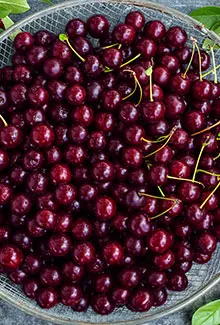
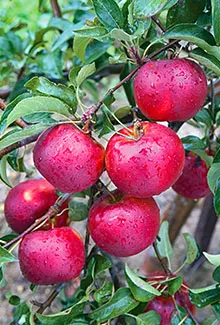
Plant apple and cherry trees 30'-40' apart; apricot, pears, plums and peaches about 20' apart following the instructions in the section "Preparing the Ground for Planting" on page 3.


  [Index]


Small Fruits, Berries, and Kiwi

For best results, all fruit plants should be planted in deep, well-drained soil. They should be placed in a location where they will receive full sun and have plenty of room to grow.

CURRANTS & GOOSEBERRIES
Do best in cool, moist, partially shaded locations. Set in spring or fall. In the spring, they should be planted before the buds begin to grow. Prune any damaged roots and cut tops back to 10". When planting, the lower branches should be just a little below the soil level to encourage them to develop into bush form. Space 4 to 6' apart. Fertilize well when you plant, water as necessary and mulch.

ELDERBERRIES

These prefer moist, well-drained soil and require 2 plants for cross-pollination. The old wood should be pruned to thin out the plant and to prevent crowding.

RED AND BLACK RASPBERRIES AND BLACKBERRIES
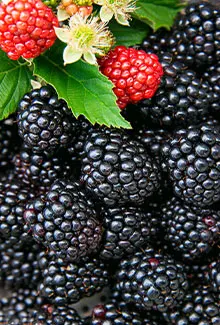
Put roots in a bucket of water while you are preparing the holes for planting. Trim off any broken roots and cut the tops of the plant back to about 6". The hole should be dug large enough to allow you to spread the roots out like a fan; firmly pack the soil around the roots. Plant 3-5' apart in 6' rows. Red Raspberries should be planted 1-2" deeper than they were in the nursery (look for original soil line); Black Raspberries should be 1" deeper. Blackberries should be planted just about as deep as they were at the nursery. The soil should be rich in humus. They should all be planted so that there is free air movement during the growing season. This lowers the humidity and discourages fungus diseases. Never let the ground dry out. Cultivate early in the season and after the plants are established. Toward midsummer, begin mulching with materials such as grass clippings. This will help to keep the weeds down and conserve moisture. If the bushes are left un-pruned, the berries will become a mass of brambles. After fruiting each year, the old canes should be cut out and burnt. A few vigorous new canes should be left for the fruit to grow on the next year. These fruiting canes should be cut back to about 2 ½' in early spring in order to encourage fruiting laterals.

BOYSENBERRIES and DEWBERRIES
These can both be trained on either a 4' tall stake or a 2-3' wire trellis. Plant in light, fertile, well drained, moisture holding soil, with peat moss added in full sun. Boysenberries should be planted 8' apart. Dewberries are planted much the same as the Blackberries. This thorn-less, deciduous perennial fruiting vine, known also as a trailing blackberry, is tender and grown mainly in the South. Plant 4' apart in rows 6' apart, one month before last frost. When planting, clip canes to 6" stubs and place at the depth they grew in the nursery. DO NOT plant them where tomatoes, potatoes, or eggplants have grown previously. Young shoots, from the present year's growth, should be kept on the ground and fastened with wire brackets to keep them out of the way. The fruiting canes should be looped over the trellis and cut off after bearing. As the new canes develop, the second year, let them lie on the ground as the first year. After the old canes have born fruit, cut and burn them to protect plants from anthracnose. Also cut and burn any stubs, which do not sprout. From the new canes, 14-15 canes should then be selected for the next season's crop. The new canes should then be tied to the trellis. Mulch to keep in moisture and reduce weeds. If using straw or sawdust, add extra nitrogen. In colder areas they should be covered with hay. Well-rotted manure, or compost should be used as fertilizer in the spring by working it into the soil around each plant, but don't fertilize too heavily or you will have lush plant growth at the expense of fruit.

BLUEBERRIES
These do best in a cool, moist climate that does not have hot, dry winds. The soil should be moist, light textured and contain a high proportion of organic matter. The optimum acidity level is from pH 4.0 to 4.5. It is beneficial to mix soil with liberal amounts of peat moss and Ferrous Sulfate. Plant in spring or fall, using 2 varieties or more for good pollination. Each year 3-4" of sawdust or peat mulch should be applied. Blueberries have shallow root systems, so a shallow cultivation is required. Prune annually AFTER the 4th year, cutting back damaged wood to healthy strong growth.

GRAPES
These should be planted 6' apart in a broad and deep hole. The top should be cut back to 2 or 3 strong buds. They should be planted deep enough to keep the roots from drying out and the hole should be filled with a rich soil or compost. Place the dirt firmly around the roots and water well. They should be kept cultivated through the first season. Once the vines are established they should be mulched with straw, leaves or ground corncobs. A well-decomposed manure is the best fertilizer to use, but do not apply if the vines are making excessive growth because a moderate growth of canes, which mature early, is preferred.

Prune annually while dormant (before buds start to swell). The fruit clusters are formed from the buds on 1-year-old canes. Canes that have borne fruit will not bear again so prune those off leaving approximately four new canes on each plant. To prune properly, 80 to 90% of the wood must be removed.


PLANT JUST ABOVE SECOND BUD AND GROW on a sturdy trellis or fence giving grapes good air circulation to prevent rot and mildew.


STRAWBERRIES
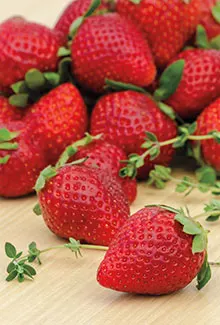
Plant in fertile, well cultivated soil. Set the plant with the crown just at the surface of the soil. Be sure roots are spread out fan-shaped and hang down full length without crowding. For the garden, set them at 2 foot intervals. Mulch them with 3 or 4" of straw in the fall. The mulch can be left on the next season to retain moisture and keep down weeds.


RHUBARB
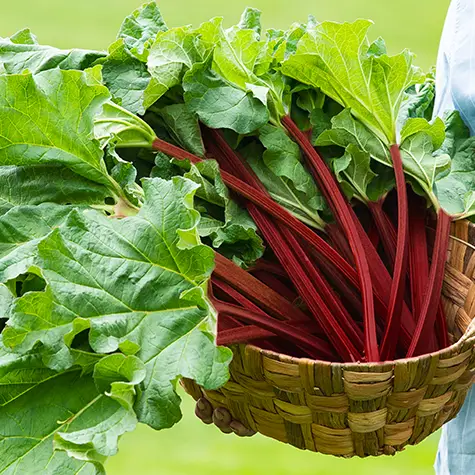
Plant in rich, well limed garden soil in the spring or the fall. Plant rhubarb divisions 3 feet apart so crown is 1 to 3" below the surface of the soil. Give plenty of moisture, clean cultivation, and feed generously yearly. No stalks should be pulled until the second year and then harvested lightly. The third year and after, they may be pulled over a 6-week period from early spring until early summer. Plants may be dug, divided and moved in either the fall or the spring.

KIWI
Shipped: 2 ¼" pot.
Male in blue bags, Female in pink bags.
Soil: well-drained
Light: full sun to partial shade, likes humidity
Plant: 8' apart in rows 10-16' apart
Fruit: late summer
Fruit Size: ¾" to 1 ½"
Zones: 4-10
Time to Bear Fruit: 3-4 years

Mature Plant: Up to 10 gallons of fruit from 2 vines

This ornamental creeper will quickly cover arbors, fences or trellises. It can be trained to cover an area 8 feet high by 30 feet wide, creating an excellent screen. Must have both male and female for cross-pollination. Your male kiwi, which will supply sufficient pollen for 5-7 female plants, should be placed within 200-300' of any female kiwi you wish to bear fruit. Grows like a grape, harvest September-October, must have a dormant period. Insect and disease resistant.

CARING FOR YOUR PLANTS - When first received, transplant into a larger pot. Keep it inside in a sunny location until plant is stronger, then transplant outside. You'll need to protect your kiwi from the frost in the spring when any new young growth is on the plant, because the crop for that season may be lost. If a late spring frost is in the forecast, cover the plant with burlap or an old sheet. Be sure to provide a support system soon after planting. Kiwi should receive an inch of water a week, either through rainfall or watering. Allowing the soil to dry out in the summer will damage the fruit crop and reduce winter hardiness. The first winter after planting your kiwi apply a very deep (4-6") layer of humus mulch after the soil has frozen.

PRUNING - You must prune in the summer to have the vines fruit. If left un-pruned it may take up to six years to flower. To prune, pinch back the canes as they grow from the two main lateral branches (Cordons). In the spring the canes grow quickly to 8" long. Prune these back to about 4". You may need to do this every few days or so. You can stop pruning around mid-summer.


  [Index]


House and Container Plants

CARE INSTRUCTIONS
* Upon receipt, immediately remove your plants from the packaging. Transit, from our shipping department to your home, can cause some stress on the plants. They could appear dry and/or wilted. Place them in a moderately sunny window and water them well; they should perk back up within a few days, but they should be given 6 weeks to come completely out of the shipping shock.
* Cleaning your plants, once every month or two, will remove dust that prevents them from breathing properly. A damp cloth, or gentle mist of water is enough to clean away most deposits. DO NOT try any odd methods such as milk, salad dressing, or commercial leaf polishes - they will only block up the pores on the leaf surface.
* Fertilizing must be done with care. Although you may be tempted to fertilize your new plants - DON'T. The plants should be established prior to beginning a feeding program. Most brands of fertilizer are fine, but we do recommend that the dosage be cut in half to prevent overfeeding. Never apply dry fertilizer unless the soil is moist.
* Watering kills plants more than anything else, be it under watering or over watering. Do not use cold water; let the water sit awhile to warm up to room temperature. They should be watered from the top, rather than the bottom to prevent buildup of salts at the surface. Ideally pure, clean rainwater, or melted snow should be used to water your plants. Tap water is okay as long as it has not passed through most water-softening devices.
* Insects can cause a great deal of harm to your plants. We have been very careful to send you healthy plants that are free of insects. The best thing is to keep them this way. If plants have aphids or mites, a gentle wash will usually remove them from the plant. If the problem persists, use a general-purpose insecticide (cautiously and sparingly). Dwarf Musa Banana Keep very moist at all times, but do not allow to stand in water. Lots of humidity required; for best results use a humidifier. Very sensitive to cool temperatures; ideal temperature at night is 65-70º and 75-80º during the day. Should be fertilized all year, but more heavily during the summer. Do NOT prune. Bright Light to Full Sun.

Begonia Keep soil evenly moist and keep out of strong sunlight, as it will pale the color of the leaves.

Bird of Paradise Typically this plant will not flower until it is about 3 or 4 years old (we send 2 year old plants) and has 8 to 10 mature leaves. They bloom September to May. Fertilize once per month. Filtered or Indirect Light; Evenly Moist.

Blueberry, "Tophat" Miniature bush plants grow only 2' tall and about 12" in diameter. Berries are medium large, bright blue, firm, with good flavor. Perfect for growing in a pot on the patio or indoors in a sunny window. Prefers acidic soil. Bright Light to Full Sun.

Bougainvillea Can bloom year round, continuously, in ideal conditions; expect slower growth during fall and early winter. Can be trained to any size and several shapes -- from small and bushy to a large, trellised display. A little pruning in the spring will promote new growth and flowering. Bright to Filtered Light. Constant moisture in the summer and somewhat dry in the winter.

Cactus - Christmas, Easter, Thanksgiving, Twilight Tangerine Holiday Cactus like a rich soil that is kept evenly moist. Fertilize every two weeks from spring through August. These cacti are photoperiodic: The day length determines when they will bloom. They need long nights and short days in order to blossom. Provide about 14 hours of continual darkness in every 24-hour period, starting eight weeks before you want them to bloom. The plant can be covered to provide the needed amount of darkness. Filtered or Indirect Light; Evenly Moist.

Caladium Caladiums are ideal for adding color to the shady spots of your yard. Work great as houseplants or for container gardening. In zones below 10, plant in the yard for the summer and take them indoors as a houseplant for the winter. In zone 10 you can enjoy them year-round outside.

3-in-1 Citrus Consists of a Lemon, Orange, and Tangerine. All three are to be kept in one pot. The plant is a dwarf, but the fruits are full size. Keep moist. Bright Light to Full Sun.

Daisy Tree Enjoy it outdoors during the summer and then move it indoors for the winter. Requires partial to full sun but keep it away from areas that get too hot. Keep soil moist during the summer. Prune plants after flowering to keep uniform shape.

Eucalyptus Cinerea Keep evenly moist; fertilize every month from spring through fall. Bright Light to Full Sun.

Flaming Golden Candles Pachystachys lutea Prefers full sun and medium moisture. Leaf drop will happen if temperatures go down into the 60's. Indoors will grow from 12-18" tall. Also known as yellow or golden shrimp plant. Flowers from June to October.

Fuchsia During blooming time (Late Winter through Summer) keep evenly moist and keep out of direct light; fertilize every 2 weeks. During the winter, allow the plant to rest in a cool room and quit fertilizing. During this time allow the soil to dry out before watering. Around late February, new shoots will appear, cut the stems back to encourage branching and begin to water evenly again.

Fragrant Trailing Gardenia Gardenias prefer an acidic soil. Being winter bloomers they will only flower under cool conditions, so keep the day temperatures around 70-75 degrees, and the night temperatures 10 degrees less. Fertilize monthly from January to September. They do best in very humid conditions; mist daily.

Mosquito Shoo Geranium Prefer bright sunlight and circulating air. Water heavily, and then allow to nearly dry out before watering again. This plant can be grown outdoors during frost-free seasons, or outdoors year round in frost-free climates. Repels mosquitoes for up to 10 feet.

Regalia Geranium Unlike most other Geraniums, this variety does not like full sun. Prefers cooler temperatures, so guard against mid-day sun and heat. Water heavily, and then allow to nearly dry out before watering again. Fertilize twice monthly while blooming.

Ghost Plant (succulent) In their natural habitat, succulents receive water infrequently. Plant should be watered thoroughly and then allowed to dry out, before watering again. During cooler months, watering should only be done to prevent the plant from shriveling. Once established, fertilize plants lightly in the spring. Bright Light to Full Sun.

Dwarf Grapefruit Produces fruit within 12 months. Requires at least 4 hours of direct sunlight per day for best results. Likes moist, but not wet soil.

Hawaiian Wedding Plant Keep evenly moist during its active growing cycle, sparingly during the rest period. Needs a constant room temperature and will bloom in 8 weeks. Bright indirect sunlight.

Chinese Hibiscus Fertilize every 2 weeks from spring until fall, while the plant is actively growing. Some leaves will fall during the winter, indicating the beginning of the natural resting state. During this time, keep the Hibiscus in a cool room (45-50 degrees) and only water enough to prevent the soil from drying out completely. Prune back in the spring. Bright Light to Full Sun. Indoor Juniper Prefers well-drained, acidic soil. To thrive this plant must go through a winter dormancy period. To do so, keep it in an enclosed breezeway that remains cool but above freezing. It should still receive sun during this dormant period. Bright Light to Full Sun.

Dwarf Lemon Produces full size Lemons (usually only 1-2 at a time) within 12 months. Requires at least 4 hours of direct sunlight per day for best results. Likes moist, but not wet soil.

Dwarf Lime Produces full size fruit within 12 months. Requires at least 4 hours of direct sunlight per day. Likes moist, but not wet soil.

Unique Flowing Maple Flowering Maple will need good light to produce large cup shaped flowers. A healthy plant under good lighting conditions can blossom all year long.

Medusa Ornamental Pepper Plant should be kept evenly moist; not over watered or over dry (leaves will drop if too wet or too dry). Fertilize when plant is actively growing or flowering. Repot in winter or early spring as needed. Bright Light to Full Sun.

Mystifying Prayer Plant Soil should be moist at all times except winter, when the soil should be allowed to dry out some. Fertilize every two months from spring to fall. Filtered or Indirect Light.

Dwarf Orange Will produce fruit within 12 months; typically 4-6 fruit. Older plants will produce more fruit. Requires at least 4 hours of direct sunlight per day for best results. Likes moist, but not wet soil.

Orchids - Cattleyas Orchids require high humidity (50-75); keeping the pot on a tray filled with pebbles and water should help meet this humidity requirement. Orchids should NOT be planted in soil; they should be planted in Fir Bark. This will allow for proper air circulation around the roots. Repotting should only be done every 2 to 3 years. A 30-10-10 liquid fertilizer should be used monthly. Watering should be done carefully, as bark deep in the pot could still contain enough moisture, while the bark on top may appear dry. Blooms typically remain for a month or more, during the spring and fall. Filtered or Indirect Light; while blossoming, the orchid should be kept away from strong sunlight.

Passion Flower Keep potting mix moist, keep in a warm room, and fertilize every 2 weeks when actively growing. Requires moist air; a humidifier can be used for best results. During winter, keep at 50º and water sparingly. Bright Light to Full Sun.

Queens Tears Billbergia zebrine Prefers sun to part shade and ordinary soil; water when dry, but still requires good quick drainage. Daily misting of plant is favorable.

Rabbit's Foot Fern Also called the "Good Luck" plant because of its charming silvery-brown, fur-like rhizomes. This is the most delicate and finely cut of the Davallias. Grows 12-18" tall. Inside use direct light or put under lights, outdoors use indirect, filtered light, or partial shade. Never let ferns dry out completely. Require high humidity, provide daily misting and stand their pots on pebbles in water filled trays. DO NOT bury the rhizomes in soil; drape over side of pot.

Resurrection Plant Plant will arrive looking dead. Place in a shallow bowl of water. The stems will spread and blossom into a green fern 8" across in just 24 hours. Once this occurs it can be planted into a pot or the garden.

Miniature Roses Miniature roses do well near a window with bright light. Grow them in a cool room and fertilize every 3 to 4 weeks. Prune as one would a garden rose. Allow soil to slightly dry out between watering. Foliage loss is normal from October through December, as the plant is in its natural resting period. To encourage this resting period, begin to decrease watering after the plant has stopped flowering. During this time, do not fertilize and only give enough water to prevent the soil from drying out completely.

Shrimp Plant Plant does not require much water; prefers to completely dry out between watering. Can be fertilized once a month and should be pruned frequently to keep a compact shape. Should almost always be in bloom. Bright Light to Full Sun.

Star Fish Flower Water thoroughly and then allow to dry out before watering again. Needs at least 4 hours of bright light/full sun per day. Once the plant is established it should be watered once per month.

Star of Jasmine Requires at least 4 hours of direct sunlight during the winter. Jasmine prefers 50-55 degree temperatures at night and 68-72 degree temperatures during the day. The soil should be allowed to slightly dry out between watering. Fertilizer should be used every 2 to 3 months. Bright Light to Full Sun.

Indoor Strawberry Requires a medium amount of water and full sun. Prefers 6 hours of sun per day.

Sweet Leaf Plant Stevia rebaudiana Full sun to light shade in almost any soil; needs good drainage. Leaves can be eaten fresh or dried. Sold in health stores as a sugar alternative.

Dwarf Tangerine Will produce fruit within 12 months; ripens in winter. Requires at least 4 hours of direct sunlight per day for best results. Likes moist, but not wet soil.

Voodoo Bulbs Arum cornutum Bright indirect light to shade is best with rich soil. Keep soil moist but not wet. Bring indoors in winter in north, hardy in zones 6-10.
  [Index]


Potted Items There are some items that we send out in pots including houseplants and tender perennials. Plants that arrive in pots are NOT dormant. Due to the tenderness of these plants we do not begin shipping them until April because of the cold temperatures they may encounter during transit.

When potted items arrive at your home, they may look wilted or have lost leaves; this is okay! Immediately remove them from the packaging and plant as soon as possible.

If the plants arrive too early and it is too cold to plant them, they can be placed inside in a sunny window and watered. Do not allow them to dry out. Once there is no longer a chance of frost, you may plant them outside.
  [Index]


Bulbs Bulbs that you plant in the fall spend the winter creating a strong root system and come up in early spring. Amend soil with organic material and plant bulbs according to the chart below in loose soil. To eliminate air spaces make sure and firm soil as you plant. Mulch in colder climates. Measurements in the chart are from the soil surface to the bulb top.

Summer flowering bulbs like the warm weather. Set out after the danger of frost is past and soil has warmed. To get an early start, you may plant Cannas, Tuberous Begonias and Dahlias in flats indoors. Plant Glads at 10 day intervals throughout growing season and allow 70 to 90 days to mature. Mix peat moss or compost with your soil to improve drainage and keep bulbs from rotting. Adding bone meal will help boost root development. Fertilize with a balanced fertilizer at the rate of 1 lb. per 100 square feet monthly after planting and until foliage yellows. This will help replenish nutrients in the bulb for next year's flowers. With the exception of lilies, spring planted bulbs are tender and must be dug and stored in cold climates. After the first frost, dig, clean, dry and store for the winter in damp peat moss and sand or vermiculite. Store them at 50º and DO NOT ALLOW TO FREEZE.

BULBS AND TUBERS
Description Light
Depth
Spacing
Height
Season
Allium Sun
4"
3"
15"
Fall
Allium, Glant Sun
4-6"
12-18"
4'
Fall
Amaryllis, Miniature Sun
2-3"
5-7"
8-12"
Spring
Anemone Sun/Pt Shade
4"
6-8"
10-14"
Spring
Babiana, Mixed Sun/Light Shade
5-9"
2-3"
12"
Spring
Begonia Shade/Pt Shade
1"
12"
12"
Spring
Bluebells Sun/Pt Shade
3-4"
6-8"
12-14"
Fall
Caladium Shade/Pt Shade
3-4"
12"
2-4"
Spring
Calla Lily Pt Shade
3"
12-18"
12-18"
Spring
Canna Sun/Pt Sun
2"
15-20"
3-8'
Spring
Crocosmia Sun
3-5"
6-8"
24-26"
Spring
Crocus Sun/Pt Shade
3-5"
2-3"
6-8"
Fall
Crown Imperial Sun/Pt Shade
6-8"
8-12"
2-3'
Fall
Cyclamen, Hardy Light Shade
1-2"
6-8"
6-10"
Fall/Spring
Daffodil Sun/Pt Shade
5"
4-6"
1-2'
Fall
Daffodil, Mini Sun/Pt Shade
2"
2-6"
8-12"
Fall
Dahlia Sun
3-4"
12-24"
2-4'
Spring
Dutch Iris Sun
6"
6"
1-2'
Fall/Spring
Freesias Sun to Lt Shade
2"
3-6"
8-16"
Spring
Gladiolus Sun/Light Shade
4-6"
4-5"
2-4'
Spring
Gladiolus, Hardy Sun/Light Shade
4"
5-8"
2-3'
Fall/Spring
Gladiolus, Orchid Sun
3"
4-6"
3-4'
Fall/Spring
Glory of the Sun Sun
3-5"
8-12"
14-16"
Spring
Hyacinth Sun/Light Shade
6"
6"
8-12"
Fall
Hyacinth, Grape Sun/Light Shade
3"
3"
6-8"
Fall
Ixia Sun/Pt Shade
4-5"
3-4"
16-18"
Spring
Lily Sun/Pt Shade
3-5"
3-4"
2-3'
Fall/Spring
Lily of Peru Sun
6"
12"
2-3'
Spring
Mexican Shell Flower Sun
3"
12"
2'
Spring
Montbretias Sun/Light Shade
2-3"
12-18"
1-3'
Spring
Narcissus, Large Sun/Pt Shade
5"
4-6"
1-2'
Fall
Oxalis Sun/Pt Shade
2"
4-6"
3-6"
Spring
Peacock Orchid Sun
2"
12"
3'
Spring
Ranunculus Sun/Pt Shade
2"
6-8"
12-16"
Spring
Russian Chapel Bells Sun/Pt Shade
4"
2-4"
4-8"
Fall
Scilla Light Shade
3"
4"
8"
Fall
Snowdrops Pt Shade
2-3"
2-4"
10"
Fall
Sparaxis Sun
4"
4"
14-16"
Spring
Tuberose Sun
1"
8"
24-36"
Spring
Tulip Sun/Pt Shade
4-6"
6"
8-30"
Fall
Turks Cap Sun/Pt Shade
6-8"
6"
3-4'
Fall
Windflowers, Grecian Pt Shade
2"
12"
6-12"
Fall

  [Index]


Perennials A perennial is a plant that will come back year after year if undamaged. Most of the perennials we ship arrive bare root. Some are shipped in small pots (see potted items for more information). Perennials typically will not flower the first year as they are establishing their root systems and foliage to support blooms the next season.

The following chart gives tips as to light, spacing, planting methods and other hints. In general, perennials require deep, well-drained garden soil that retains moisture. The planting holes should be wide and deep enough for the roots to have room to be spread out. After setting, the plants should be thoroughly watered and lightly mulched. Mulch heavily in the fall to prevent frost damage to fall-planted perennials. Fertilize regularly throughout the growing season. Begin cultivation early and continue all season. Remove faded blooms to prolong flowering.

When plants make a rapid growth they should be divided every few years to rejuvenate the plant. If they are not, the clumps become too large and the inside roots will be starved and crowded. This can cause the blooms to be small. Divide perennials in either fall or spring.

Ground covers are a unique variety of low-growing perennial. Often used in areas difficult to mow or cover with grass, ground covers require special planting. Plant ground covers such as Crownvetch with the crown 2-3' apart with roots pointing straight down and tops above the soil. If the tops of the plants are indistinguishable, plant crowns on the side and cover with 1-2" of soil. Water well until established and mulch to retain moisture and reduce weeds. Don't be surprised if the plants don't fill in the first year. They need to become established and develop strong root systems before forming a solid mat of ferny growth the second year. Planting Methods
1.       Plants such as Iris should be planted with the roots below the surface of the ground and the rhizome just on the surface.

2.       Plants such as Peonies should be planted with the tips of the buds just below the surface of the ground (about 1").

3.       Plants with a distinct crown should be set with the crown even with the soil surface.

4.       Plants with a fleshy root such as Hollyhocks, should be planted with the tap root straight down and the bud just below the surface of the dirt about 1". If you can't determine which end is up, lay the root on its side.

5.       Planting depth for bulbs should be 3 times their width.
          2 cm wide = 6 cm deep
Full Sun Ground Cover Poisonous
Part Sun to Part Shade Deer Resistant
Shade Attracts Butterflies
Drought Tolerant Good Cut Flowers
Can Be Planted in Water Garden Attracts Hummingbirds
Description Attributes
Height
Planting Method
Spacing
Ajuga
6-10"
3
6"
Alexander Lysimachia
2-3'
1
2-3'
Arkansas Amsonia
3'
3
3'
Arum Italicum
6-8"
5
6-8"
Aruncus, Goat's Beard
3'
3
3-5'
Aster, Dwarf
18-24"
3
18"
Astilbe
1-2'
3
1-2'
Azure Russian Sage
3-5'
3
18"
Baby's Breath
18-30"
3
1 1/2 - 3'
Bachelor's Button
24"
3
15-24"
Black Eyed Susan
24-30"
3
1-2'
Bleeding Heart
2-3'
4
2'
Bloodroot
4-6"
3
1-2'
Bog Bean
6-18"
3
1-2'
Butterfly Bush
6-8'
3
4-6'
Butterfly Plant, Orange Glory
12-18"
4
6-12"
Butterfly Plant, Pink
3-5'
4
3'
Candytuft
6-8"
3
6"
Canterbury Bells
12-36"
3
4-12"
Cardinal Flower, Red
2-3'
3
12"
Carnations
15-20"
3
12-20"
Cherry Bells
24-30"
3
12"
Columbine